Types of Schedules - by duration
- Full-Day Schedule: Outlines events from wake-up to sleep, including free time.
- Partial Schedule: Focuses on segments (e.g., morning, school time, play time).
- Activity Schedule: Breaks down steps in routines (e.g., morning routine: wake up, fold bed, brush teeth, use the washroom).
During free time, support the person in choosing their favorite activities. Guide the process at first. Gradually, allow for independent planning—step by step.
Here are examples of these types of schedules.
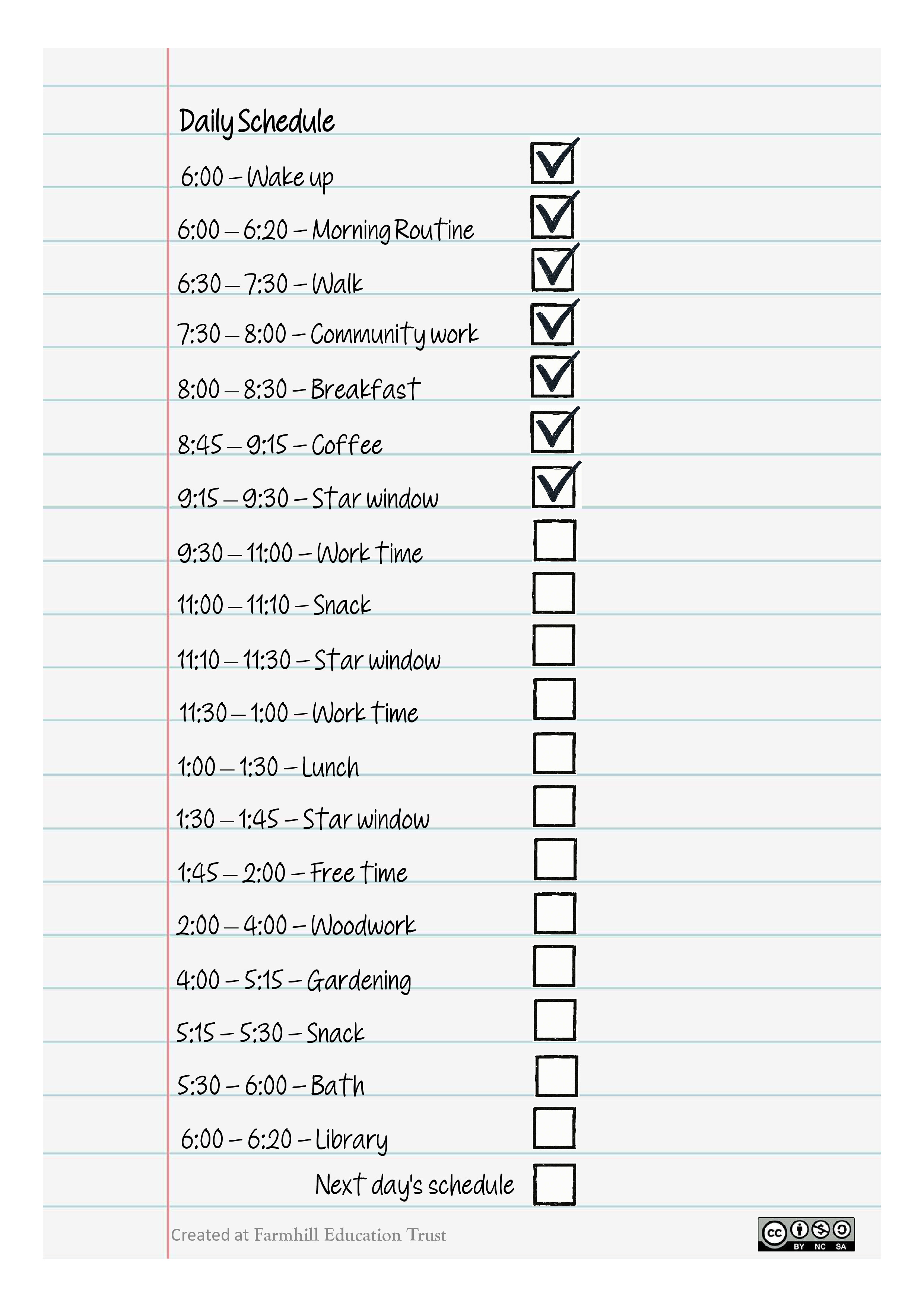
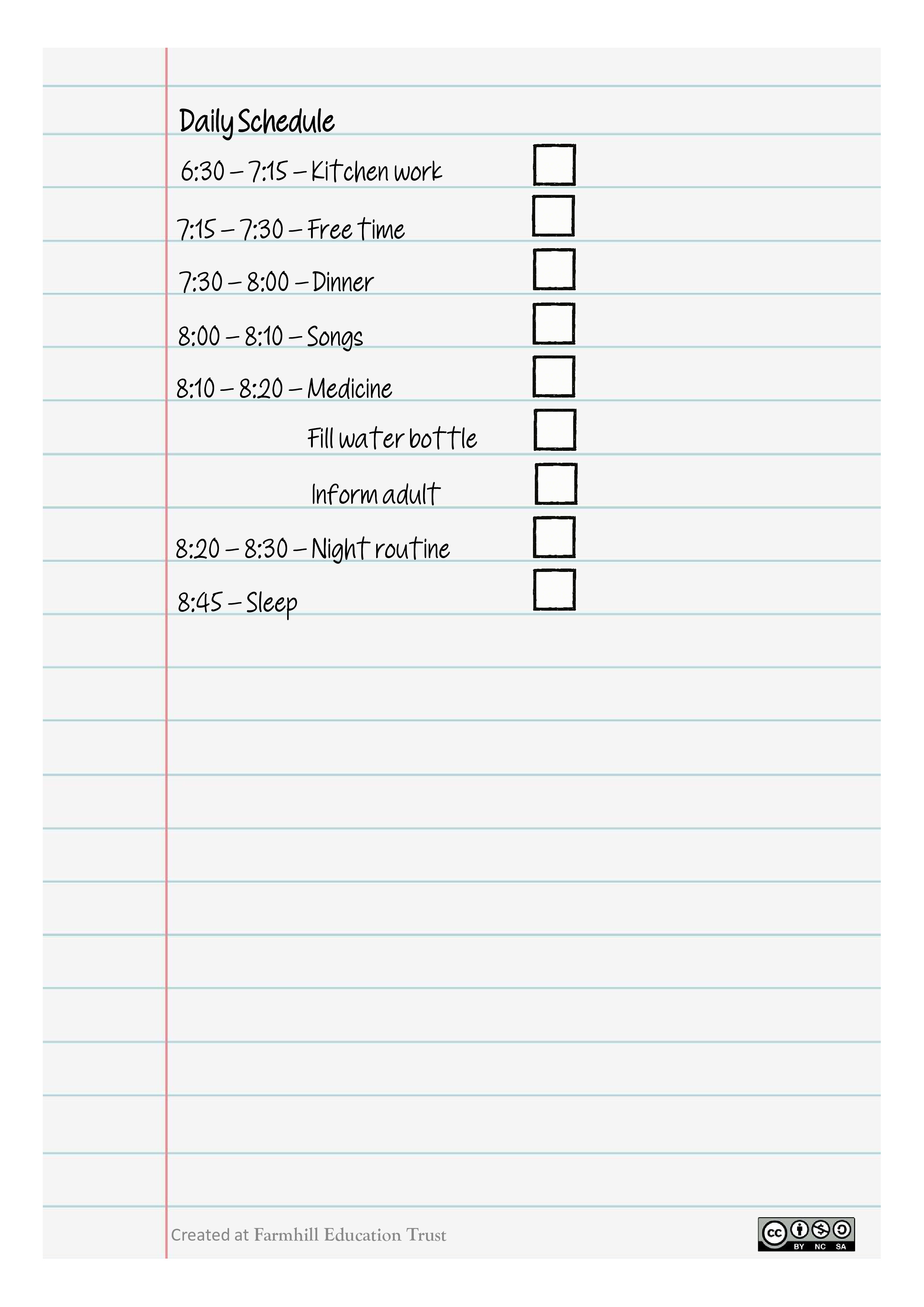
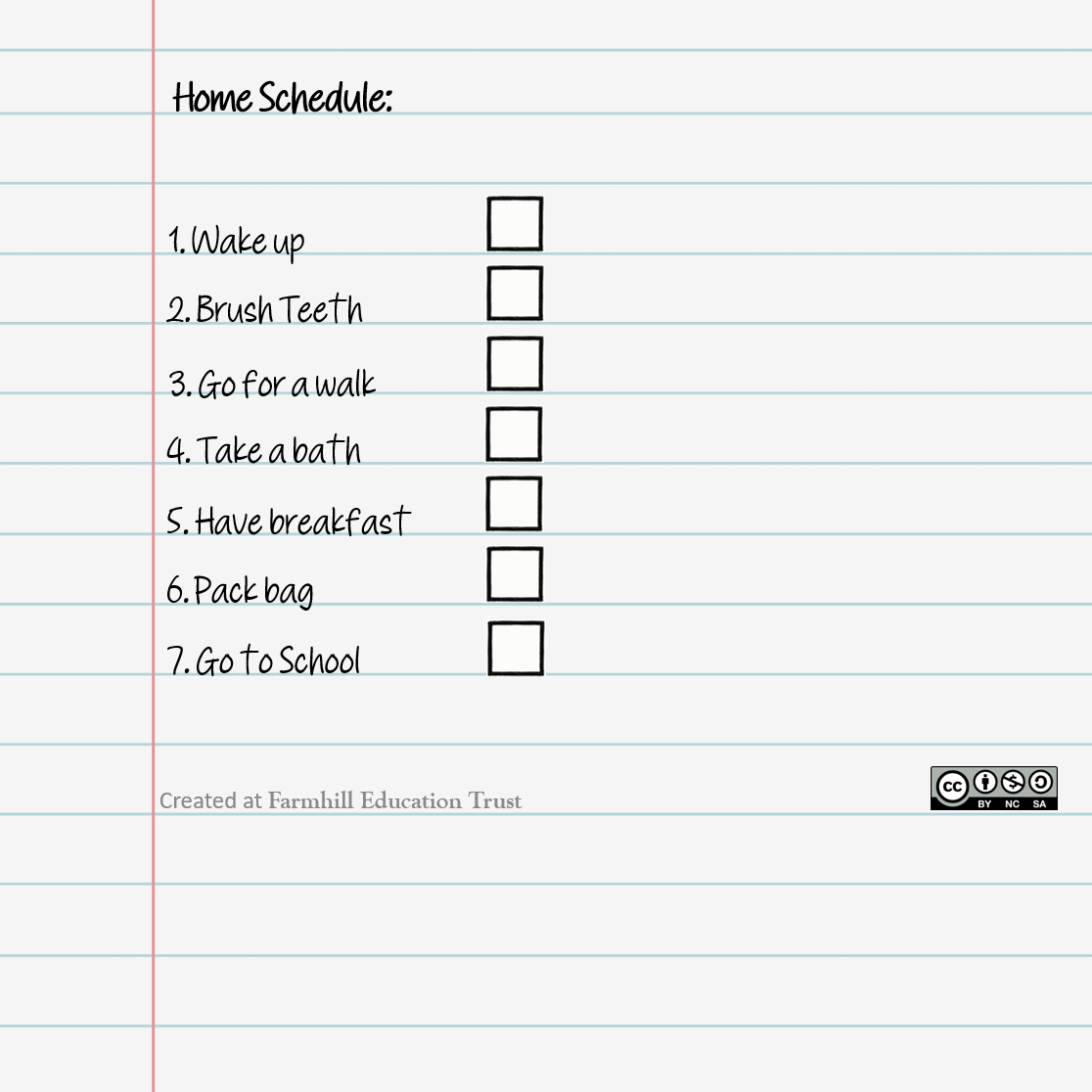
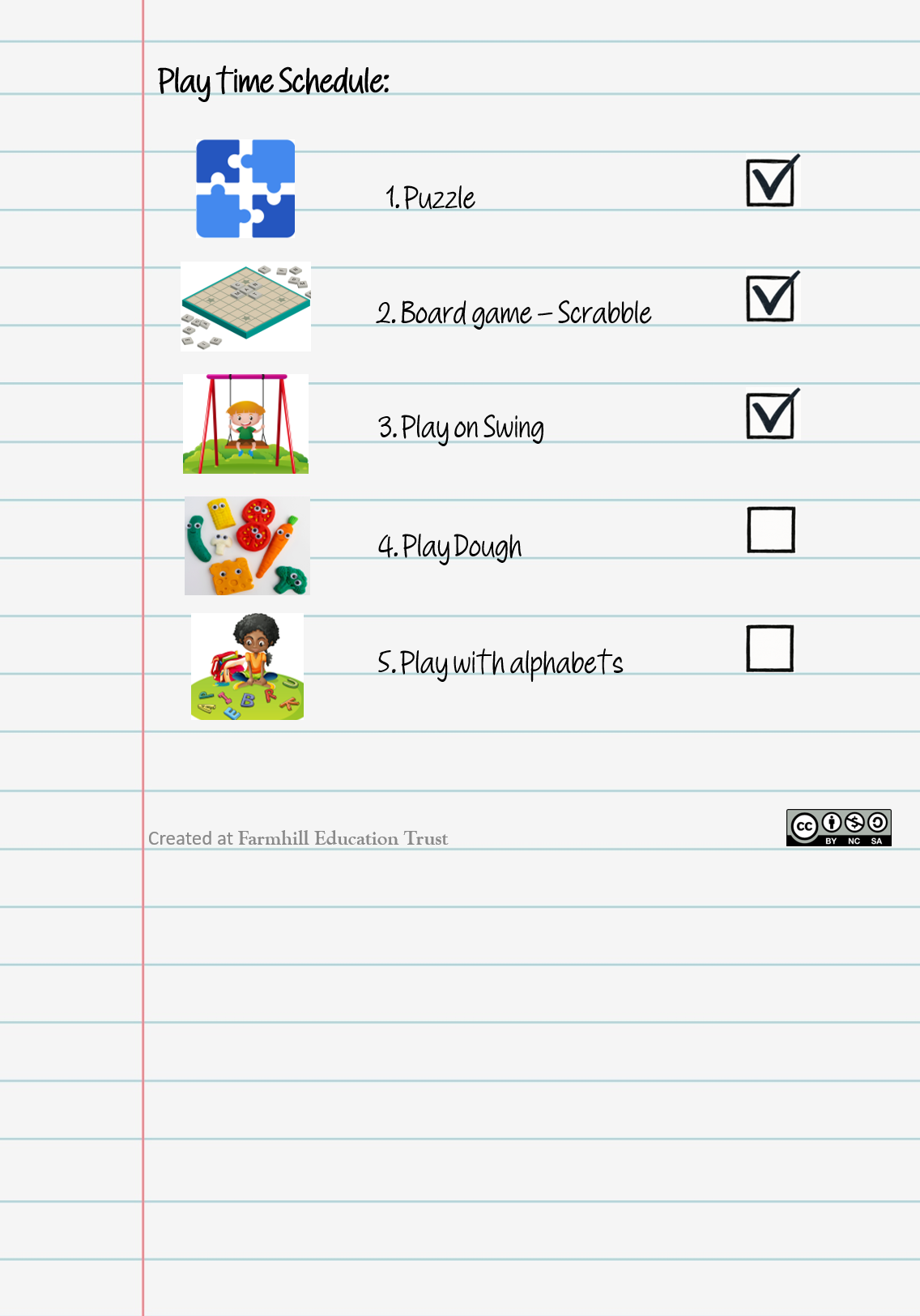
Types of Schedules - Visual and Written
- Visual schedules: Attach 3-4 activities at a time, add more as needed. Some might need to see the whole day at once.
- Written schedules: Use simple language, check off as you go.
Schedules can be chunked for part of a day or a single activity (e.g., steps for brushing or an exercise routine). Some may use digital versions (like Google Keep).
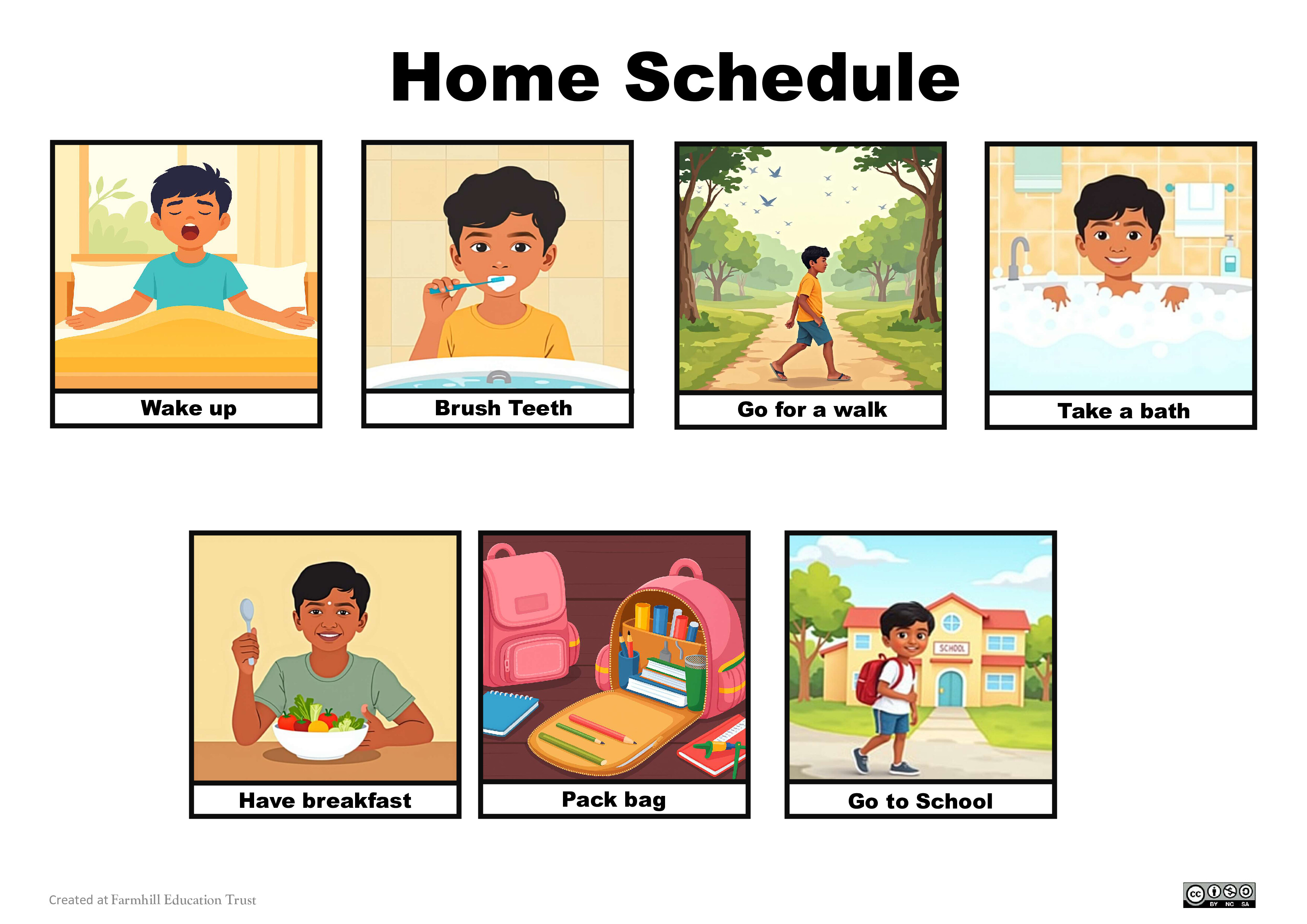
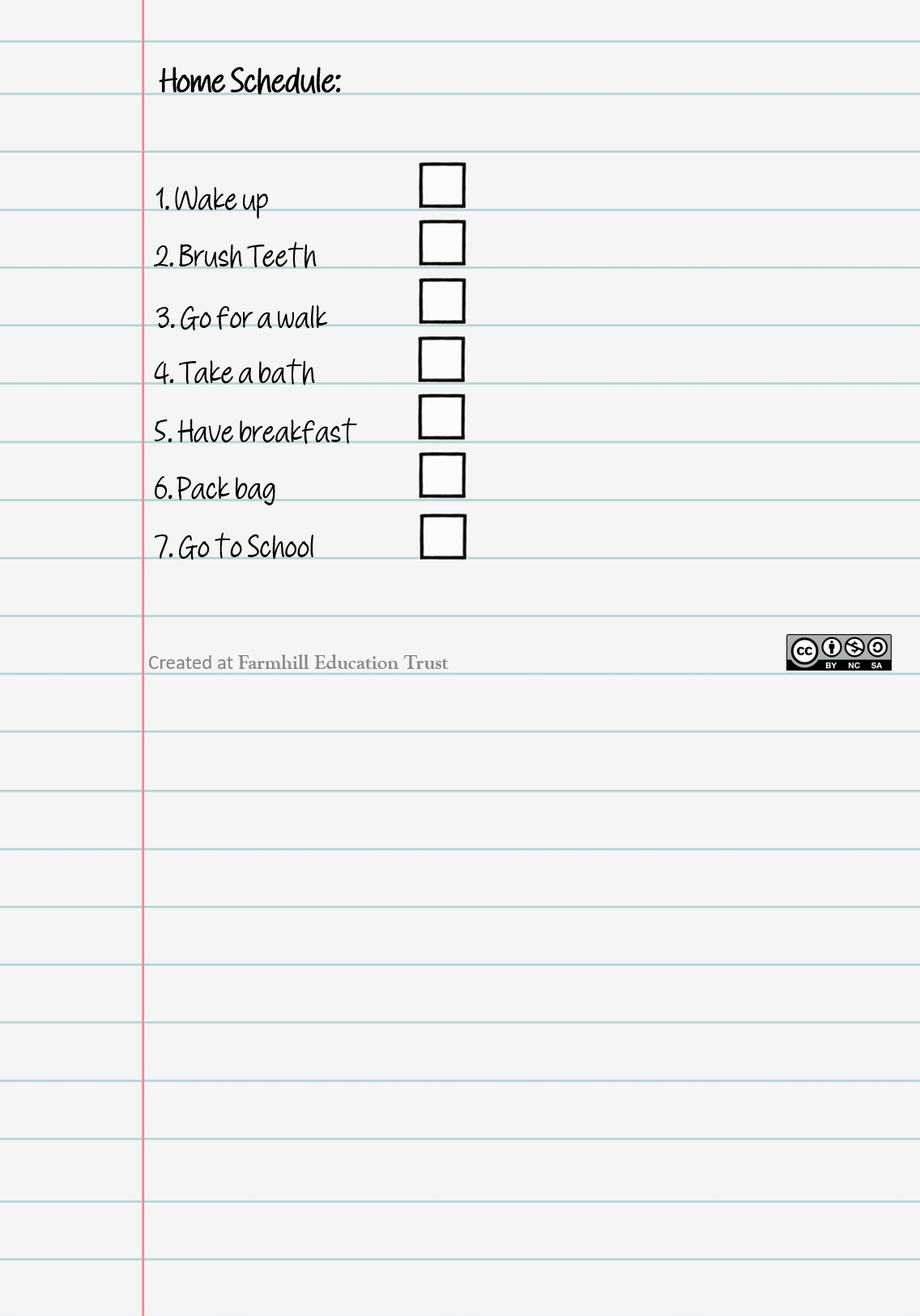
Making Changes to Schedules
Change is part of life. Schedules can flex, but these steps help:
- Inform the person about the change (don't surprise them, unless it's urgent).
- Make the change together—update the schedule in front of them.
- Pause when upset; use emotion charts or yes/no questions to discuss feelings and new choices.
- Offer alternatives: Let the person pick what comes next.
- Example:
- If painting can’t happen (no paints at home), acknowledge the disappointment, apologize, and suggest options (like going for a walk). Change the schedule together.