Resource: Building Independence
Supporting Executive Function and Independence through schedules
Executive functioning includes skills such as planning, organizing, and carrying out tasks to completion. Many autistic and ADHD individuals experience unique challenges in these areas, which often means they need support from caregivers or family members during everyday routines.
Understanding the Cycle of Dependence
When executive functioning is not well established in an individual, it’s natural for caregivers to step in with lots of help, instructions, and reminders. As a result:
- Children may begin relying heavily on caregivers for “what to do next,” even when they actually know the answer.
- Caregivers can unintentionally set a pattern where their child waits for instructions or approval before acting.
- This cycle makes it harder for children and young people to build confidence in making their own choices or completing tasks on their own.
Example routines affected:
- Brushing teeth
- Eating meals
- Completing homework or learning activities
- Engaging in relaxing activities like drawing or listening to music
How This Affects the Whole Family
Over time, both the child and caregiver can become overwhelmed:
- Parents/caregivers feel exhausted by constantly giving instructions and worrying about the next step.
- Children may feel demotivated and lose interest in tasks, sometimes refusing to participate at all.
- Both may experience emotional outbursts, increased rigidity, and frustration, impacting their connection and the enjoyment of daily life.
Putting Agency in the Hands of Autistic and ADHD Individuals
Fostering agency means supporting individuals with autism and ADHD to make choices and lead parts of their routines. Key steps include:
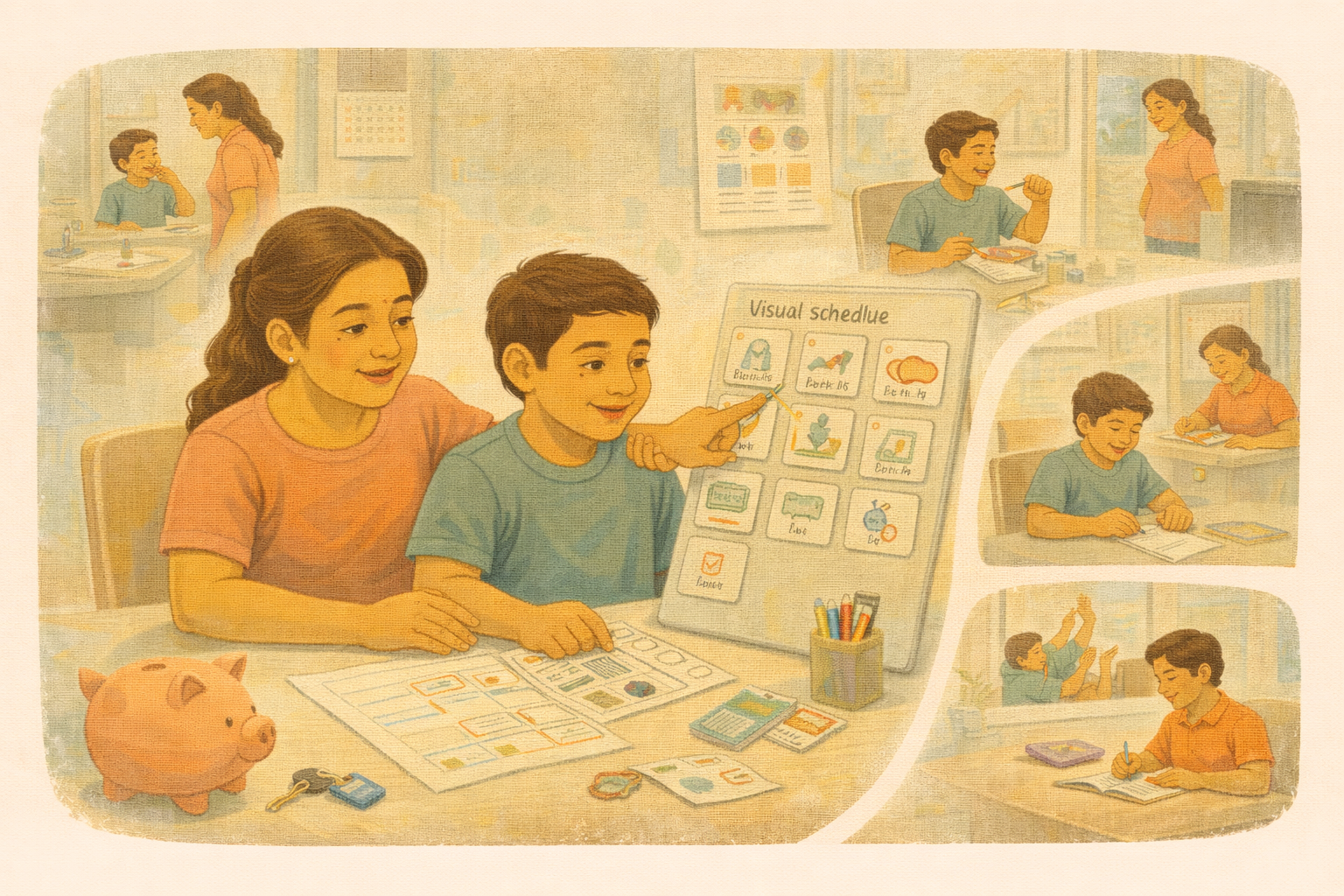
- Creating a shared workspace: A safe, collaborative space where the autistic or ADHD individual and their caregiver can work together to set goals and decide how to approach tasks.
- Making independence a goal: Gradually shifting the focus from caregiver-led to self-led routines, even if small steps are needed.
- Encouraging decision-making: Allowing individuals to choose how and when to complete certain activities or tackle challenges.
- Using visual supports and schedules: Tools like checklists or picture guides can reduce reliance on verbal instructions and boost independence.
Tips for Families and Caregivers
- Be patient and flexible—progress toward independence can take time.
- Break tasks into small, achievable steps, celebrating each success.
- Provide choices whenever possible, so the individual feels ownership over tasks.
- Use consistent routines with clear expectations, but allow for flexibility as skills grow.
- Notice and reduce “prompt dependency”—pause before stepping in, giving the individual a chance to try on their own.
Building Towards Independence
The journey toward greater independence is unique for every individual. By sharing responsibility, setting mutual goals, and trusting the capabilities of people with autism or ADHD, families can create a more positive, less stressful experience for everyone.