Visiting a Dentist
The final aspect of Preventive care is visiting a dentist periodically.
Visiting a dentist periodically and learning to interact with the doctor, the people and the environment are important goals to pursue. It will facilitate preventive care which will aid good oral hygiene, education about dental hygiene as well as taking help when there is a need.
However, it is important that the parents or the caretakers understand how challenging it is for the autistic person. The environment at a dentist’s place can be daunting for a person who has never been there. A chair that leans back gradually could throw a person into panic mode. The caretaker as well as the clinic must be sensitive to these experiences and expressions and respond with empathy. The caretakers should ideally carry whatever mode of communication the child uses so that they are able to respond by themselves.
Do not hesitate to take a step back if the person wants to stop the process mid way. Just leave everything and go home. You can always prepare again and come. Instead, if you push through, it will cause trauma to the autistic person and any future references to a dentist might result in lots of emotional outbursts.
What can a parent do
Preparation - Preparation helps in building cooperation and managing anxiety around a new place and people. Dentist visit can be marked on a calendar. Social story can help in preparation. A check list can help by keeping things predictable.
Visiting a dentist social story
The social story focuses on tooth brushing practices. Read this story repeatedly to reinforce learning. Remember social stories are most effective when used just before situations they address. Also, ensure the social story in in accordance with the real life situation - if not, you can change the relevant portions and use it.
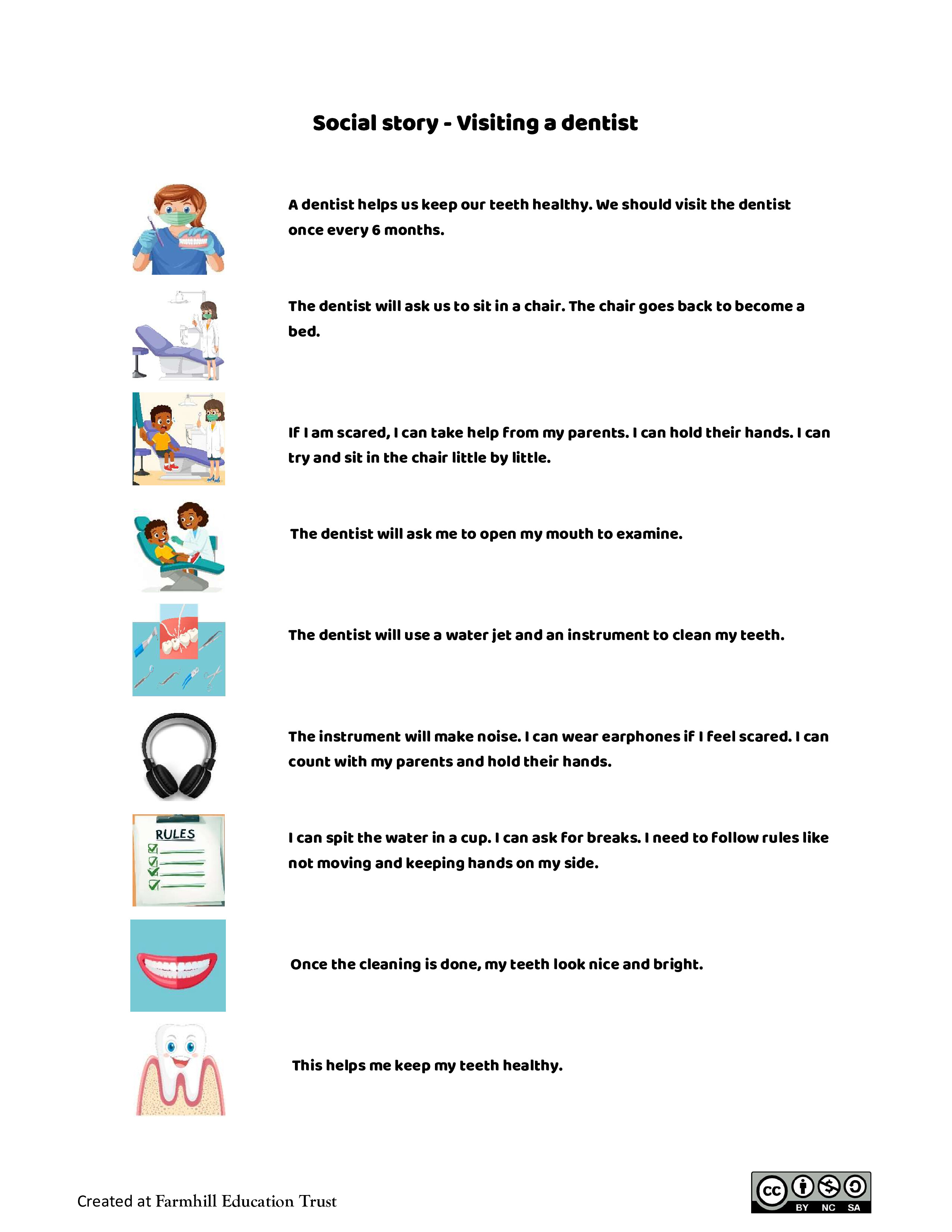
Download Visiting Dentist Social Story
Visiting a dentist check list
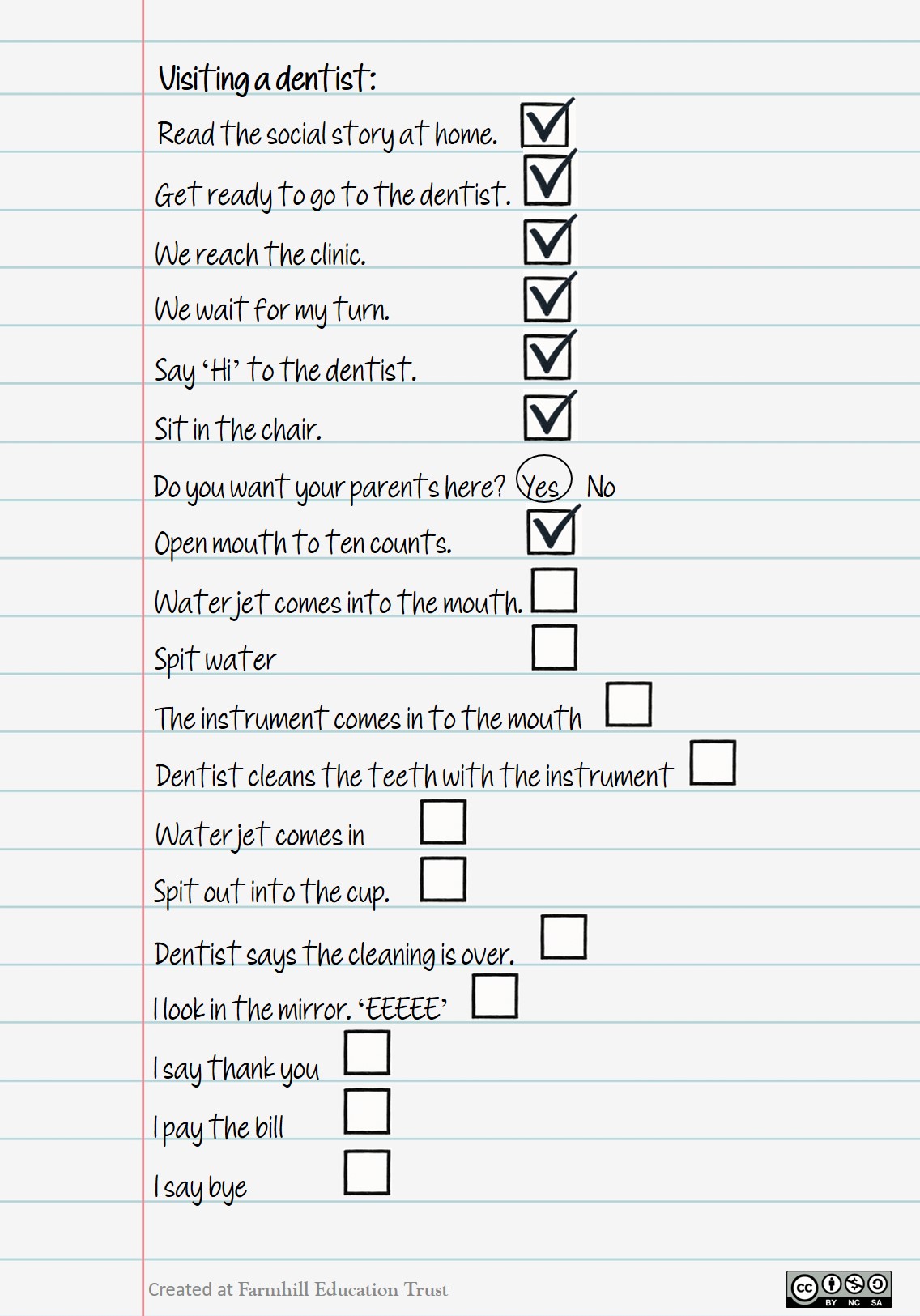
Download Visiting Dentist Sample checklist
Please note that these resources and interventions are shared for general guidance. Designing and executing interventions - more importantly - noticing how the child responds and modifying the interventions so the child does not get distressed, is a specialist job. Consult qualified therapists as necessary.