Food and Hygiene Habits for Preventive Dental Care
Preventive dental care includes three important, related areas - food and Hygiene habits, Toothbrushing, Visiting a dentist. By focusing on enabling preventive care, we empower autistic individuals to engage in dental care mindfully, to self manage wherever possible and to make healthy choices. The following information is focused on enabling preventive dental care in young children.
Food and Hygiene Habits
Getting children to eat healthy foods is one of the primary aspects of oral hygiene. We need to think of well balanced diet in this context. Children should also eat fibre rich food which needs chewing so that their gums are exercised and the spaces between the teeth remains cleaner.
Key things to keep in mind are:
-
Eating foods that have lots of sugar is bad for teeth
-
Having too much milk during the night or through the night, not gargling or cleaning the mouth afterwards are more likely to cause cavities
-
Eating over-mashed soft food is not good for oral health. Cheese, beans, fresh fruits, raw vegetables, leafy greens are good for the teeth.
-
Fizzy drinks, acidic fruits and sweets are bad for teeth.
Common Behaviors that impact dental health
Mouthing: Some children tend to keep everything in the mouth. That results in many microbes going into the body.
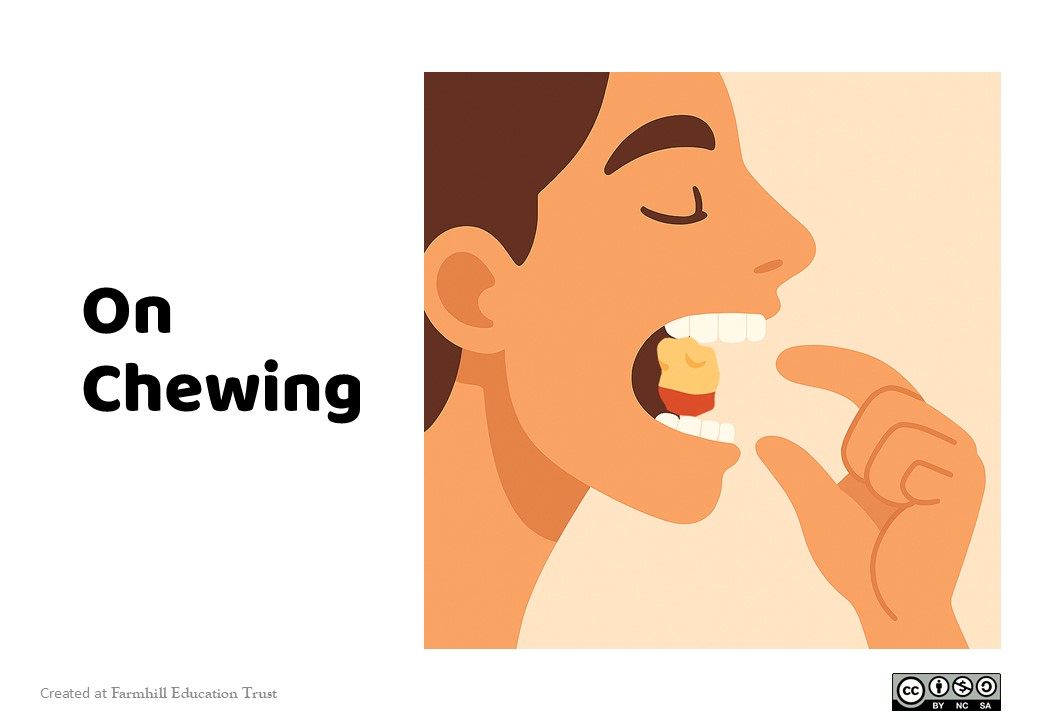
Chewing: Some children keep everything in their mouth and also chew on them. This is bad for oral hygiene and may also cause injury to teeth and gums.
Biting: Some children bite everything, like the edge of a table. Biting into really hard surfaces or things may damage the teeth.
Recources and tools for Food and Hygiene Habits
Planning to eat healthy
Eating is a part of lifestyle. Also, modelling is very powerful. So, any change we expect in the food habits of the child has to be implemented by the entire family.
The family should have a good routine for waking up and getting physical activity in the morning. It is important to drink water to stimulate bowel movement and build a sense of hunger. This is especially important for poor eaters.
It is important to plan balanced meals. Have a weekly meeting to plan the menu. Make space for favourite foods like samosas, popcorn or chicken burgers. Decide on the quantities. Even if your child is not verbal, make them a part of the meeting and let them respond with yes or no. All this activity builds predictability and reduces anxiety about favourite foods. You can use the menu as an opportunity to build communication, create a sense of time through the calendar, build it into their weekly schedule, help them get into the habit of checking written instructions or schedules instead of asking the same questions again and again…the possibilities are endless! Remember children love food and it is a great motivator. Refer to the related resource on eating for more about managing children's eating habits.
Addressing eating issues
Children may have restrictive eating habits, texture sensitivities, chewing issues or may eat too fast or too slow. Based on the severity of the problem, we can choose eating interventions to address these issues. Refer to the related resource on eating for more about addressing eating issues.
Eating right for healthy teeth - Social Story
The social story focuses on basic oral hygiene practices. Read this story repeatedly to reinforce learning. Remember social stories are most effective when used just before situations they address. Also, ensure the social story in in accordance with the real life situation - if not, you can change the relevant portions and use it.
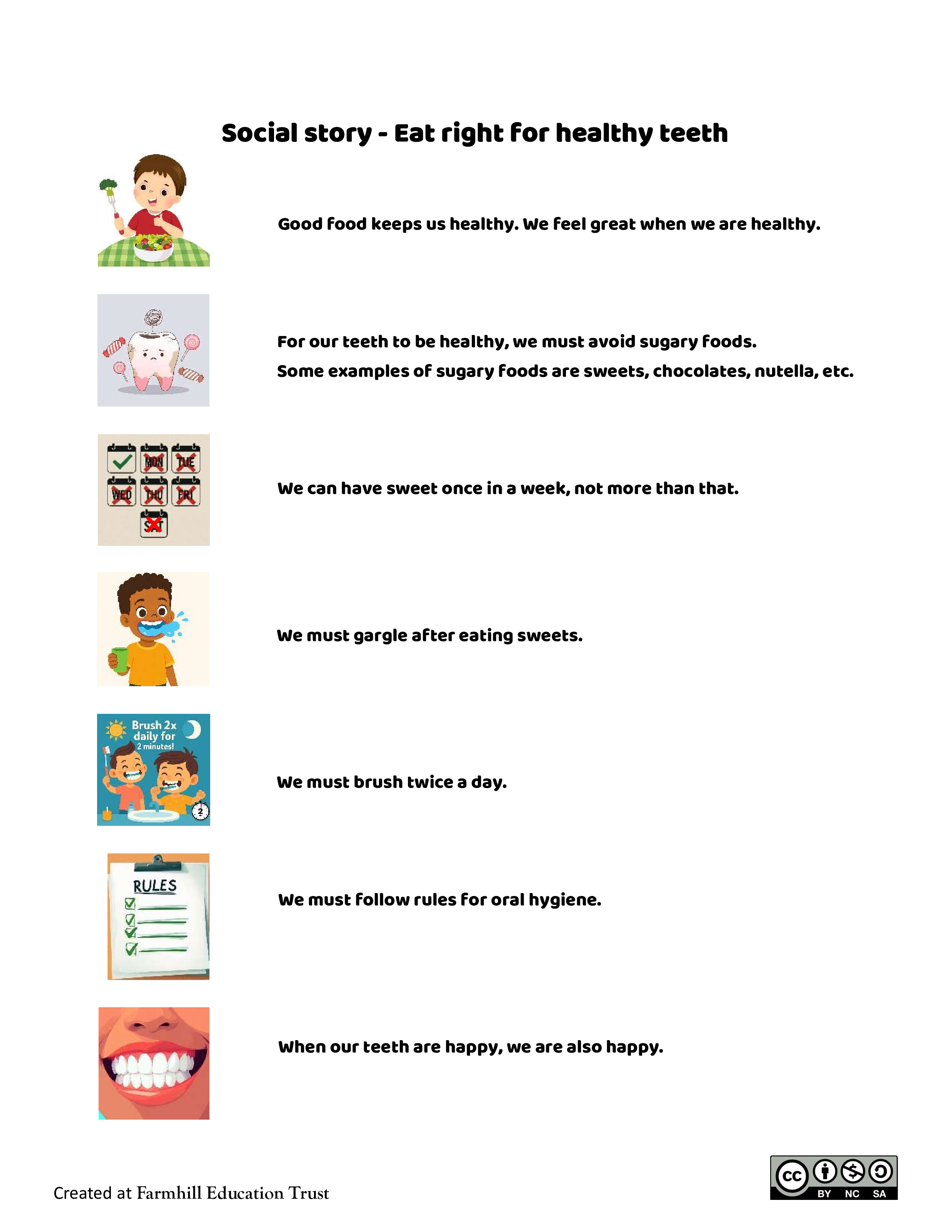
Download Eat Right Social Story
Oral Hygiene Graphic Story Book and activities
This Oral Hygiene book introduces ideas like the importance of healthy teeth, avoding sugary foods, and the need to brush daily. The activities included reinforce these ideas. Sample pages and a download link are below.
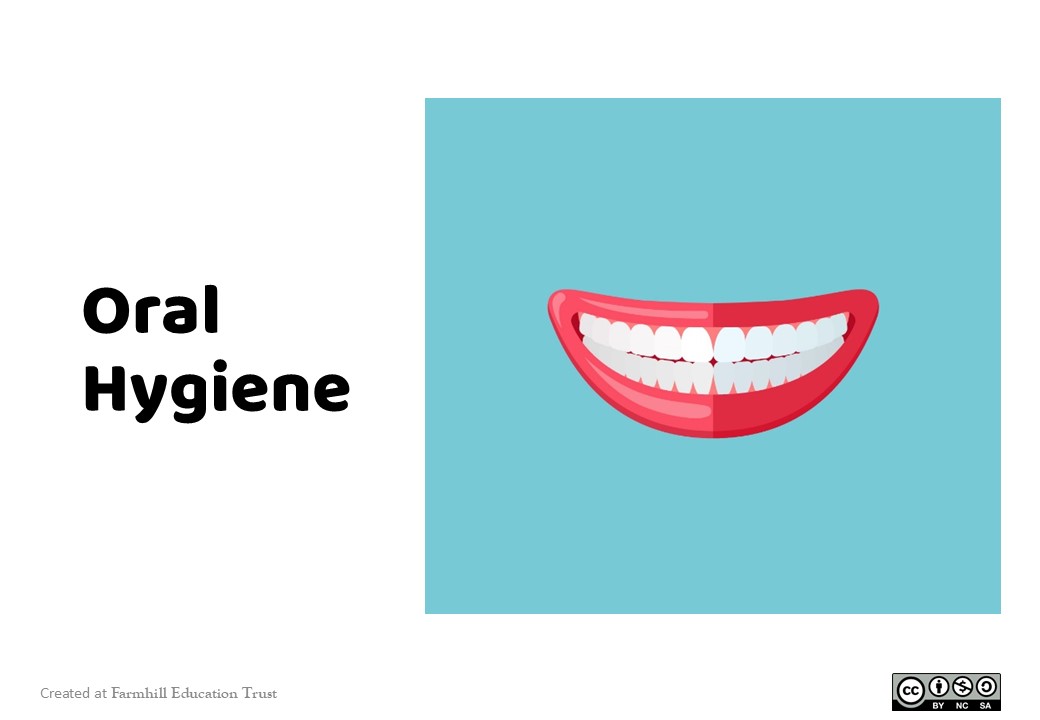
Download Oral Hygiene Graphic Book
Chewing Graphic Story Book and Activities
The graphic story book below focuses on the importance of chewing food, what to chew and what not to etc. The accompanying activities reinforce the same ideas.