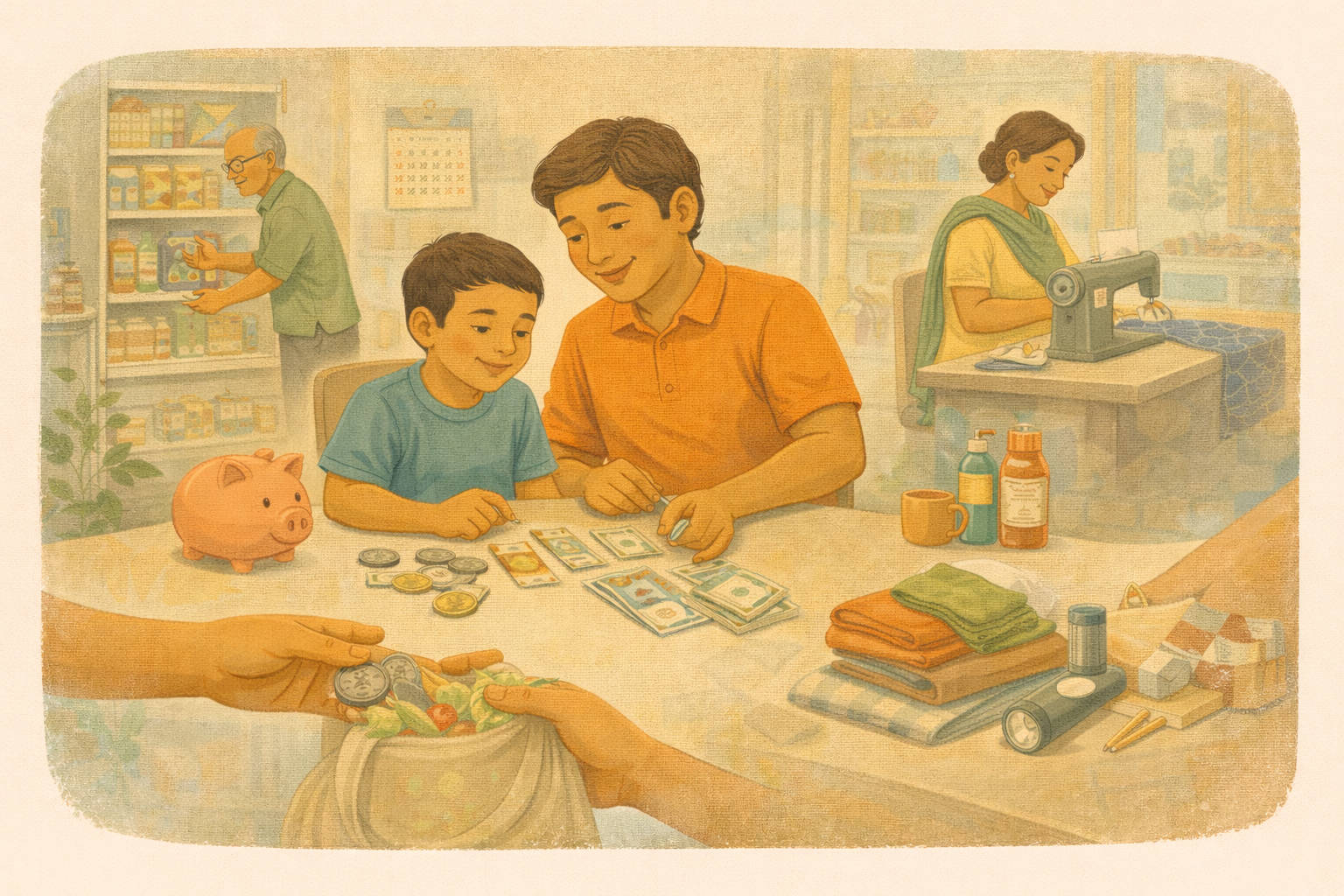
Money - where it comes from and where we use it
Children are exposed to money very young. They see it getting exchanged for almost everything from morning to evening. Money has been part of functional math for many decades and lots of activities have been identified and written about. Then the question of why we are writing one more version again.
When we try to teach money to autistic children, it quickly boils down to basic operations of mathematics. Then we see that the progress stagnates as the activities lose their novelty with the students. The consistency of answers reduces as the interest wanes off. We realised that the same happens with neurotypical children too.
However, when the Neurotypical children start to interact with the world, they learn exactly how money works, how easy or difficult it is to have money with us and who to ask, where to spend etc. The children keep their relationship with money active throughout their lives as adults as well. They become earning members and then think about saving for their family and future.
On the other hand, neurodivergent children get exposure to money only in the form of a small grocery or milk store at the corner of the street, some may even have a budget to spend on clothes and other things. The other aspects of money are not talked about. Most autistic children know money as a medium to get things, but when it comes to other uses of money, their knowledge may not be complete as they do not handle money. Many neurodivergent adults struggle with relationships with work, being reliable, accountable, feedback, conflict between wants and needs and how to make smart decisions around money to be able to do what one wants to do in life. Rather than learning money as something to do about basic mathematical operations, it is important to make a case for why one should learn about money.
That is why when we introduce money as a learning concept, it stays popular until we play shop game or a restaurant game. It is challenging to take it forward from there and make sense to the autistic learner.
About this lesson plan
This lesson is designed for primary or early middle school learners and aims to help children understand what money is, where it comes from, how it is used, and why it is important. The session can run for 60–75 minutes, or be split into two shorter lessons if needed. The purpose is to take students from their existing ideas about money and guide them through a clear understanding of work, earning, saving, spending, and differentiating between goods and services.
Lesson Objectives
By the end of the lesson, children should be able to:
- Identify things for which we need money
- Recognize people who typically have money and why
- Explain where money comes from (earning through work)
- Understand how we spend money at different places
- Understand that we buy things and well as pay some people