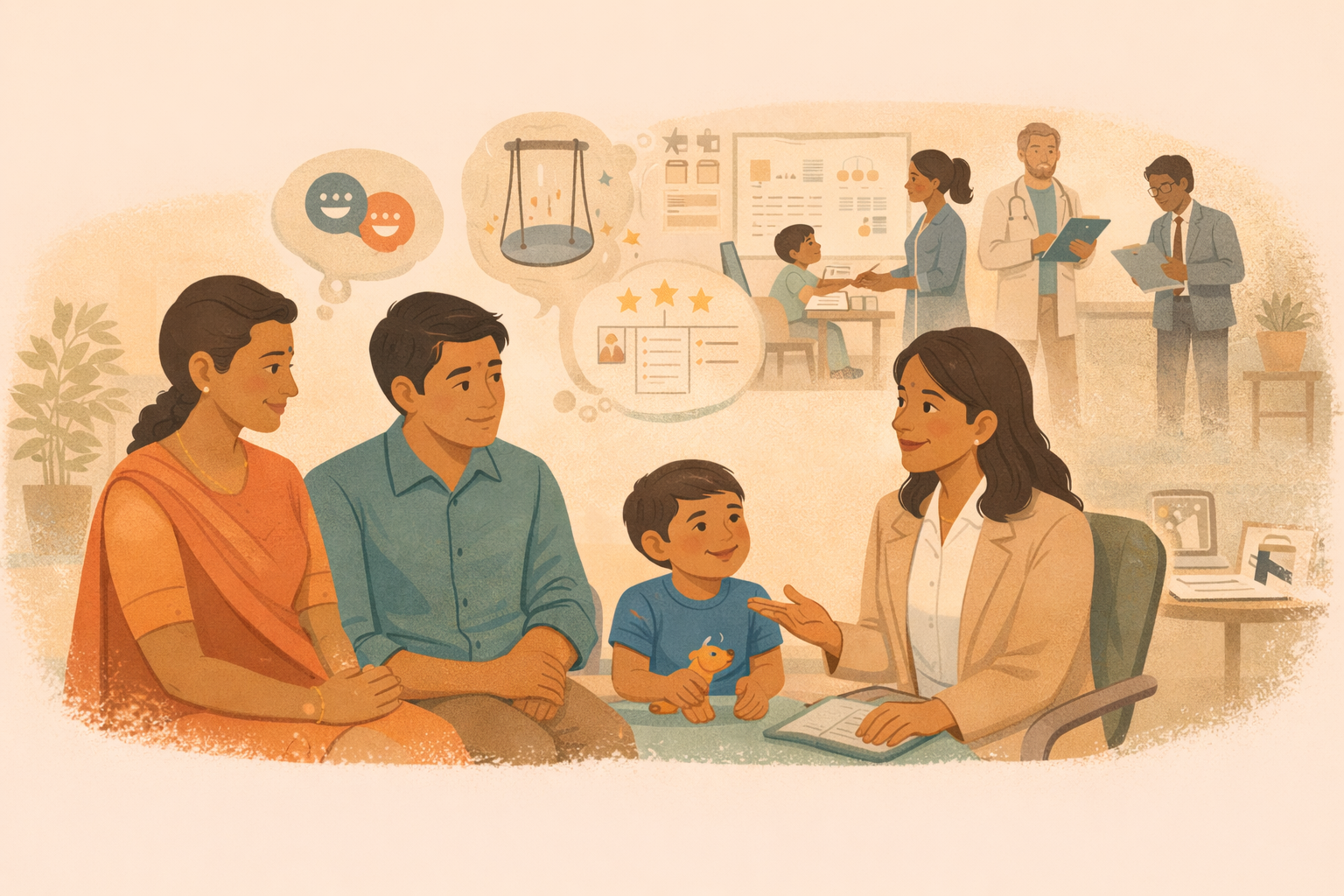
The importance of diagnosis
One of the questions that parents usually have is about the need for diagnosis. Many times parents do not want to get a diagnosis for a variety of reasons. Some parents argue that diagnosis just attaches a label and they are not comfortable with the label. Some parents feel that the child does not need a label as long as he/she is able to ‘cope’ with autism. Many parents are weary of the negative social implications of acknowledging their child’s autism.
So, why should one seek a diagnosis? The primary reason for either getting a diagnosis or not should be about the difference it makes to the child. When seen from that point of view, it seems to make more sense to get a diagnosis for the following reasons:
- A diagnosis provides parents with accurate information about the various difficulties the child may have. This will help them get appropriate help.
- A diagnosis helps get appropriate support for everyone, both the parents and the child
- Without a diagnosis, the child grows up without support and accommodations. However, many people on the spectrum are aware that they do not ‘fit in’. This could result in feelings of alienation. Also, the effort needed to ‘fit in’ and cope is hard work.
- In the absence of a diagnosis and an acknowledgement of their difficulties, children may be pushed to achieve goals that are set by the systems around them, instead of working on their specific difficulties. This may result in them growing up to be adolescents that have completed school and cleared exams but otherwise not functional for their age.
- As the child grows up to be an adult, and social and emotional demands on them increase, they may not be able to cope. In the absence of a diagnosis, it may lead to feelings of inadequacy and can lead to depression and other mental health issues.
- A diagnosis helps people make sense of who they are and their life experiences.
When should parents go for screening and diagnosis?
Naturally, parents routinely observe and assess their child's progress during the early years, a practice known as developmental monitoring. In this process, parents, family members, or caregivers closely follow a child's development in areas such as play, learning, speech, behavior, and physical movement. This vigilance allows them to gauge whether the child is reaching the typical developmental milestones and promptly detect any concerns that may arise. It's advisable to maintain regular communication with the child's primary physician regarding their developmental progress. Additionally, doctors routinely evaluate a child's development during their regular check-up visits.
When there are concerns about the development of the child, parents should consult their primary care physician and they may be referred for further screening.