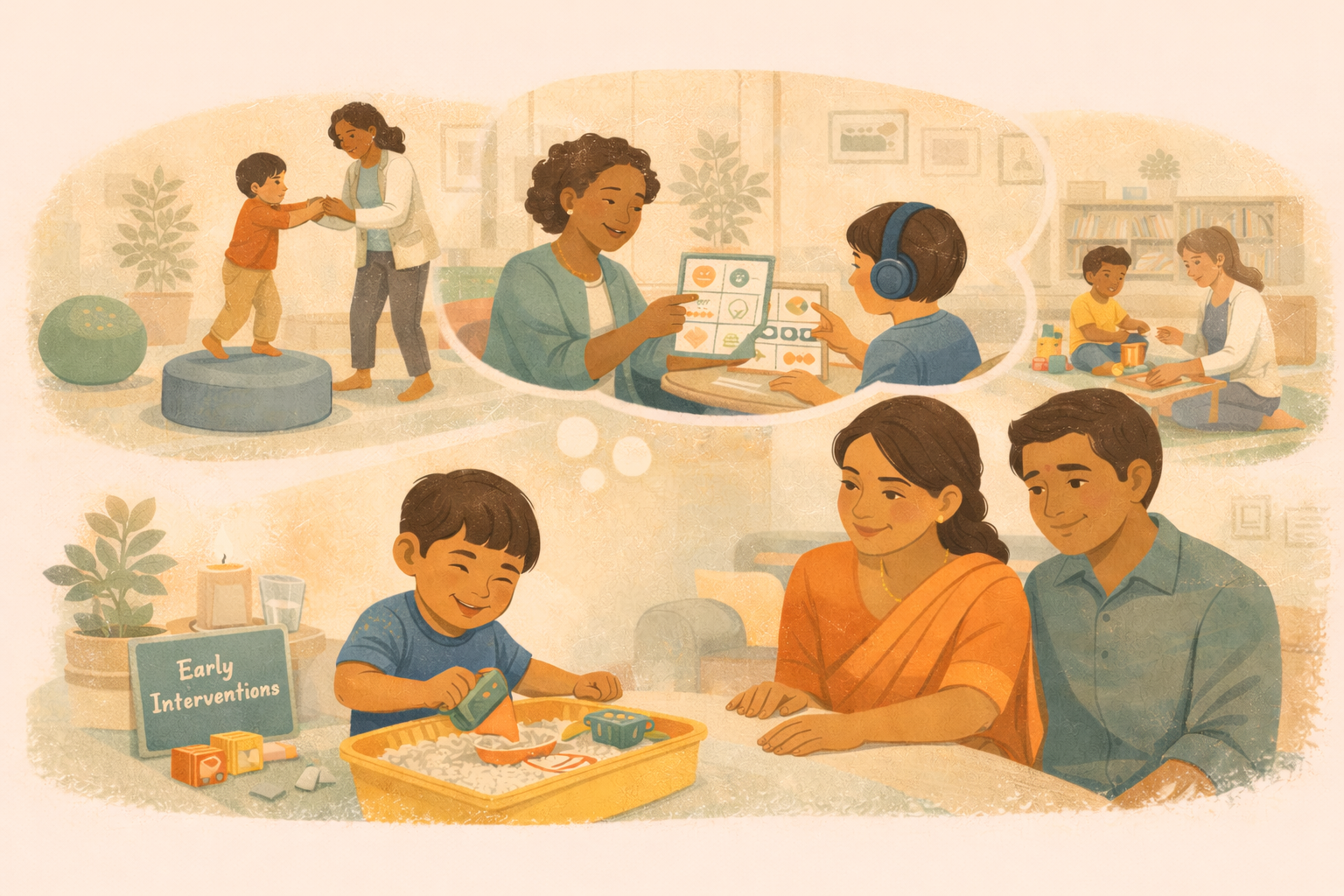
Early Intervention
Once a child is diagnosed with autism and the parents have made some sort of peace with the diagnosis, the next question is, what do we do to help the child?
This is when we talk about a variety of approaches called ‘early interventions.’ Early interventions like occupational therapy, speech therapy, and in some cases behavioral therapy are routinely recommended for children on the autism spectrum. A variety of other supplemental approaches like play therapy, music therapy, art therapy and in some cases horse therapy, water therapy and horticulture therapy are also offered.
Here is a video on Early Intervention from Unmeed Child Development Center based in Mumbai. This video is about the importance of observing the developments in the first 3 years of a child’s life, outcomes of early intervention and the many roles therapists play.
Here is a brief summary of the video:
-
Observe how your child is developing closely and act promptly if you notice signs such as delayed speech, lack of eye contact, reduced vocalization, or limited interest in play compared to other children of the same age.
-
Early intervention refers to a range of services and support provided to babies and young children (and their families) who show signs of developmental delays.
-
During the first three years, if children miss or show delay in acquiring basic communication and other skills, early intervention can help.
-
Families can also benefit from early intervention by learning how to provide a nurturing and supportive environment.
-
Various therapists like speech therapists, Occupational therapists, Behavioural therapists play different roles and help in different ways.
-
Parents need to seek assessment and support as soon as possible.